NanJing Daytrip4
Free Cancellation
Full refund if you arrive 24 hours in advance
Activity Tags
Historic Building, Natural Landscapes
Guide Service
English, Chinese
Product Brief
Echoes of Majesty: A Journey through Nanjing’s Imperial Tombs and Ancient Walls
This is no ordinary walk, but a solemn pilgrimage across time—from the cornerstone of an empire, to the monument of a nation, and finally to the steadfast shield of a capital. This itinerary will guide you to the deepest pulse of Nanjing, where the ambition of founding and the dream of revival rest in peace, and where silent witnesses of millennia stand guard.
First Movement: The Cornerstone of Empire · Ming Xiaoling Mausoleum
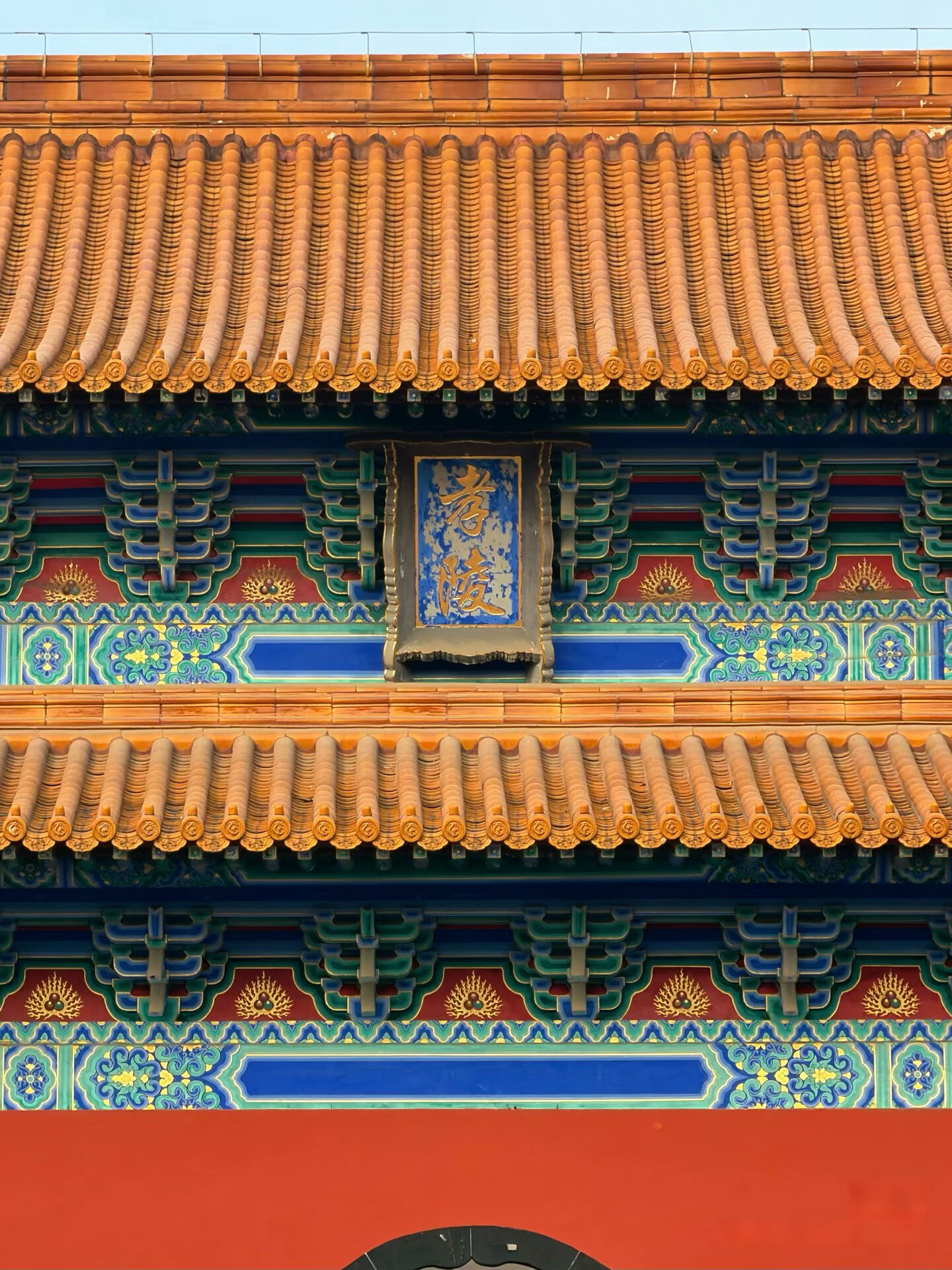
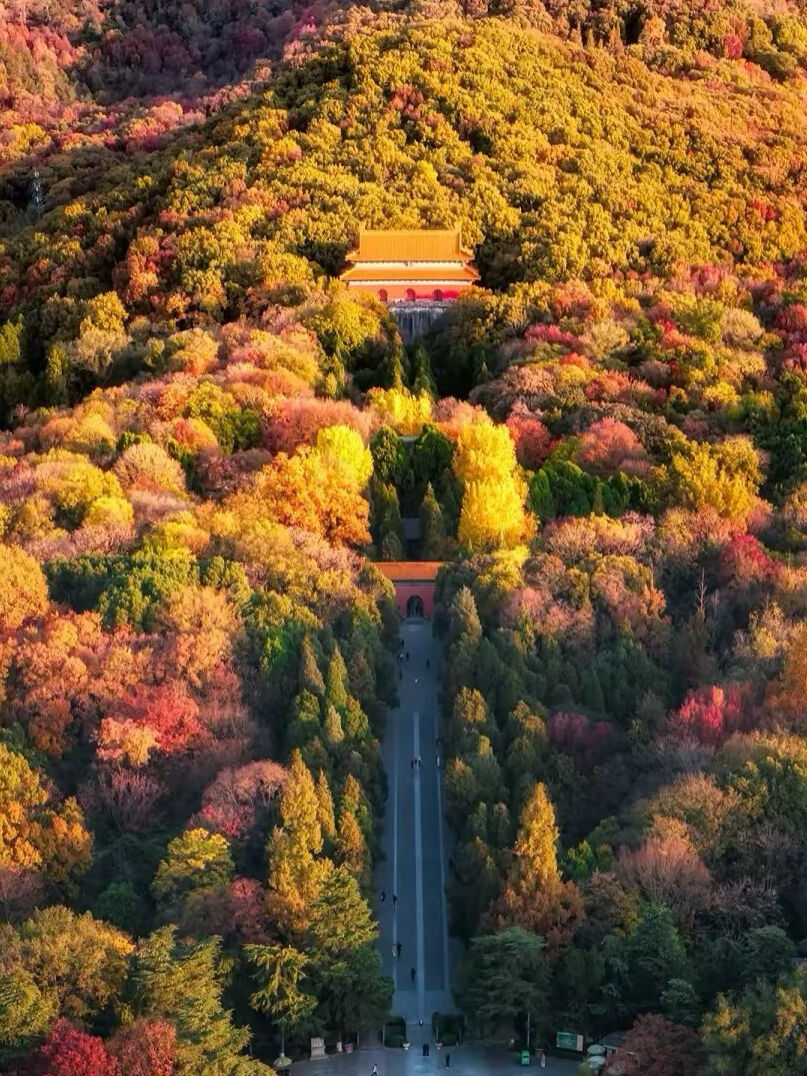
The journey begins at the Ming Xiaoling Mausoleum, the resting place of Emperor Zhu Yuanzhang, founder of the Ming Dynasty, and his empress. This is not merely a tomb—it is a philosophical masterpiece of harmony between heaven and humanity. Walking along the Sacred Way, known as “Nanjing’s Most Beautiful 600 Meters,” you will pass between solemn stone statues of mythical beasts and civil officials that have stood guard for over six centuries. In late autumn, golden ginkgo leaves and fiery Chinese tallow trees dress the solemn path in dazzling robes, creating a breathtaking dialogue between brilliance and reverence. Ascend to the Treasure Dome and gaze over the mausoleum complex merging with Purple Mountain. Here, you will feel how the majestic spirit that founded a great dynasty ultimately returns to the eternal silence of nature.
Second Movement: The Monument of Ideals · Sun Yat-sen Mausoleum
Moving from the endpoint of imperial history, we arrive at the spiritual high ground of modern China—the Sun Yat-sen Mausoleum. This memorial to Dr. Sun Yat-sen, founding father of the nation, expresses a distinct form of sublime aesthetics through its grand blue-and-white palette and minimalist geometric lines. Climbing the 392 steps is not just a physical ascent but a spiritual pilgrimage. The strict symmetry along the central axis symbolizes the unwavering faith and the ideal of “the world for all” held by the revolutionaries. From the summit at the Sacrificial Hall, look back upon the vast expanse of Nanjing unfolding below. You will understand that what rests here is not just a great man, but the very starting point of a nation’s rebirth.
Third Movement: The Fortress Shield · The Barbican
Finally, we touch the toughest skin of this ancient city—the Zhonghua Gate Fortress (Barbican). As the world’s largest and best-preserved fortress barbican, it is not merely a pile of cold bricks and stones, but a crystallization of precise and lethal military wisdom. Pass through its massive arched gateway and step into the enormous enclosed space—the high walls seem to freeze time itself. Imagine the awe-inspiring scene of ancient enemy troops being trapped “like turtles in a jar” after breaching the first gate. Climb onto the ramparts, where faint inscriptions on the ancient bricks are the silent signatures of countless artisans and soldiers. Here, Nanjing’s strategic authority as a “tiger crouching, dragon coiling” land becomes vividly tangible.
This route is a triple monumental journey spanning six hundred years.
At Ming Xiaoling, it contemplates the resting place of power within its sacred landscape.
At Sun Yat-sen Mausoleum, it ascends toward the form of an ideal.
At the Barbican, it touches the will to protect within its formidable walls.
This journey will allow you to understand what makes Nanjing, Nanjing—a timeless city that has always borne its destiny at history’s great turning points, carving its memory deeply into brick, stone, and mountain.
Itinerary
First Stop: Ming Xiaoling Mausoleum
2 minFirst Stop: Ming Xiaoling Mausoleum
Visit Duration: 2 hours.
Experience Overview:
This stop takes you to the Ming Xiaoling Mausoleum, the tomb of Zhu Yuanzhang, founder of the Ming Dynasty, and his empress. It is the largest and most intact imperial mausoleum from the Ming and Qing eras, and a UNESCO World Heritage Site. The extended 2-hour visit allows for a more immersive experience of its majestic sacred path, grand architecture, and profound integration with nature.
Core Experience & Highlights:
· 🗿 The Sacred Way (Shinto): Walk the iconic “Stone Elephant Road”, flanked by giant stone statues of mythical beasts and officials. The extra time allows for closer appreciation of the intricate carvings and the serene atmosphere of this ancient path.
· 🏛️ The Main Tomb Area: Explore the core architectural sequence, including:
· The Stele Pavilion (Sifangcheng): See the massive stone tortoise and the “Stele of Divine Merits and Sagely Virtues”.
· The Ming Tower (Minglou): Climb to the top of this structure for a panoramic view of the entire mausoleum set against Purple Mountain.
· 🌳 Integration with Nature: Experience the traditional Chinese design philosophy of “unity of heaven and humanity”, as the tomb complex is harmoniously built into the natural landscape of Purple Mountain (Zijin Shan).
Important Information:
· Location: At the south foot of Purple Mountain. Accessible by Metro Line 2 to Muxuyuan Station, then a short transfer, or by taxi.
· Admission: Separate ticket required (approx. 70 RMB/person). Not included in the base tour fee. (Ticket often includes adjacent Plum Blossom Hill.)
· 2-Hour Tour Context & Tips:
· Suggested Route: The extra time allows for a leisurely pace. Start at the Sacred Way (approx. 40-50 mins), then proceed through the Great Golden Gate, Stele Pavilion, and conclude at the Ming Tower.
· Seasonal Note: In autumn, the ginkgo and maple trees along the Sacred Way turn brilliant gold and red, creating a spectacular scene. The extended time is perfect for photography and soaking in the seasonal beauty.
· Comfort: The site involves walking and gentle slopes. Comfortable shoes are recommended.
Second Stop: Wengcheng (The Barbican Citadel) - Zhonghua Gate
2 minSecond Stop: Wengcheng (The Barbican Citadel) - Zhonghua Gate
Visit Duration: 2 hours.
Experience Overview:
This stop takes you to the most magnificent and well-preserved wengcheng (barbican citadel) of the Nanjing City Wall — Zhonghua Gate (originally named Jubao Gate). As the largest castle-style city gate in China, it is a masterpiece of ancient Chinese military architecture. Your visit here is a journey into the ingenious defensive wisdom of the Ming Dynasty, where you can walk through history and physically experience the famous tactic of “catching the enemy in a jar”.
Core Experience & Historical Significance:
· 🏰 Architectural Marvel & Defensive Genius: Zhonghua Gate is the largest and most complex existing barbican citadel in China. It features a unique “目”-shaped structure with three layers of barbicans and four arched gates. The key to its defense was the “Qianjin Zha” (heavy stone-slab gate) in each passage. Once invaders breached the outer gate, these stone gates would drop, trapping them inside the confined barbicans. Soldiers would then emerge from hidden chambers to attack from all sides — a perfect execution of the “catch the enemy in a jar” strategy.
· ⚔️ 27 Hidden Garrison Caves: This is one of the gate's most remarkable features. A total of 27 vaulted chambers (called “cangbingdong” or hidden garrison caves) are built into the gate structure. These could accommodate up to 3,000 soldiers and store vast quantities of supplies, allowing the garrison to hold out independently during a siege. Exploring these cool, dimly lit chambers gives a tangible sense of ancient military logistics.
· 🛡️ A World Heritage Legacy: The gate represents a groundbreaking innovation. Before the Ming Dynasty, barbicans were typically built outside city gates. Zhonghua Gate is a classic example of an “inner barbican” (nei wengcheng), built inside the main wall, a design first pioneered in Nanjing and which greatly enhanced defensive capabilities.
A Suggested 2-Hour Visit Route:
To fully appreciate the site within 2 hours, follow this route:
1. Enter through the main gate and stand in the first courtyard, imagining the scene of invaders being trapped.
2. Ascend to the top of the gate via the ancient ramp (horse path) on either side.
3. Walk along the broad wall top, enjoy panoramic views of the Qinhuai River and the city, and explore the upper-level hidden garrison caves.
4. Descend to explore the interior of the massive gate structure, visiting the various exhibition halls that often display historical artifacts and information about the gate's construction and the legendary merchant Shen Wansan.
5. Walk through all three barbican courtyards, exit through the innermost gate, and appreciate the full scale of this defensive masterpiece from the outside.
Essential Information for Your Itinerary:
• Ticket & Opening Hours:
- Day Visit: Ticket is 50 RMB per person. Free admission for specific groups (minors, seniors over 70, military personnel, etc.).
- Opening Hours: 8:30 - 17:00 (last entry at 17:00). Extended night visits are sometimes available until 22:00.
- Important: The ticket fee is not included in the base tour package.
• Transportation:
- Metro: Most convenient. Take Metro Line 1 and get off at Zhonghuamen Station. Exit the station and walk about 10-15 minutes to reach the gate.
- Bus: Multiple bus lines (e.g., 2, 16, 202) stop at “Zhonghuamen Chengbao” station.
- Address: Qinhuai District, inside the Zhonghua Gate Fortress, Zhonghua Road.
• Tour Context Reminder:
The 2-hour guided visit is included in the tour schedule. However, the entrance ticket and any personal expenses (souvenirs, drinks) are not covered by the base fee. Please be prepared to walk and climb some stairs. The ancient ramps and wall top offer excellent photo opportunities.
Final Stop: Plum Blossom Valley (Meihua Gu)
2 minFinal Stop: Plum Blossom Valley (Meihua Gu)
Visit Duration: 2 hours.
Experience Overview:
Conclude your Nanjing journey at the Plum Blossom Valley, the core area of the renowned “Number One Plum Mountain in China” within the Ming Xiaoling Mausoleum Scenic Area. As the city flower of Nanjing, plum blossoms here are celebrated with a history of over 1,500 years. This expansive valley, together with the adjacent Plum Blossom Hill, forms a spectacular sea of flowers covering 1,533 acres with more than 30,000 plum trees of over 330 varieties. It is a perfect spot to immerse yourself in a quintessential Jiangnan spring scene and the profound Mei (plum) culture.
Core Experiences:
· 🌸 A Feast of Blossoms & Photography: Wander through valleys and hills covered with a breathtaking tapestry of plum blossoms in various colors and shapes. The area offers countless picturesque spots, especially around cultural sites like Weixiu Pavilion (惟秀亭) and Taixiang Zhaoming (台想昭明).
· 🏞️ Scenic & Cultural Integration: Enjoy the classic landscape where blooming plum trees are set against the backdrop of the Zijin Mountain (Purple Mountain) and the ancient Ming City Wall. Discover cultural touches such as the Meihua Zhuangyun (梅花妆韵) site, which alludes to the ancient legend of “plum blossom makeup”.
· 🚣 Optional Leisure Activities: The park features an 80-acre artificial lake, Yanque Lake, which adds to the serene atmosphere. You may also find deer interacting experiences near the lake area.
Essential Information for Your Itinerary:
· Ticket & Admission:
· Important Note: Plum Blossom Valley is not a separate ticketed area. Access is included within the Ming Xiaoling Mausoleum Scenic Area ticket.
· Ticket Price: Approximately 70 RMB per person for the Ming Xiaoling ticket.
· This ticket is not included in the base tour fee.
· Best Visiting Season: Late February to Mid-March is the prime blooming period and the most popular time to visit. The scenery differs significantly outside this season.
· Transportation:
· Metro: Most convenient. Take Metro Line 2 to Muxuyuan Station (苜蓿园站). Exit 1 is closest.
· Entry Gates: From the metro, Gate 3 of Ming Xiaoling is nearby and offers a scenic walk past Yanque Lake to the valley. Gate 1 provides more direct access to the plum blossom hills.
⏳ Suggested 2-Hour Route
Given the time, a focused and efficient route is recommended:
1. Enter from Gate 3 (near Muxuyuan Metro Station), take a brief stroll by Yanque Lake.
2. Walk north into the core of Plum Blossom Valley, enjoying the blossoms around Weixiu Pavilion.
3. Proceed to the Plum Blossom Art Center area for cultural exhibits.
4. Ascend the Plum Blossom Hill to the Bo'ai Pavilion (博爱阁) for a panoramic view of the flower sea.
5. Exit from Gate 1 to conclude the tour, where public transportation is available.

Product Options
Standard product
Echoes of Majesty: A Journey through Nanjing’s Imperial Tombs and Ancient Walls
This is no ordinary walk, but a solemn pilgrimage across time—from the cornerstone of an empire, to the monument of a nation, and finally to the steadfast shield of a capital. This itinerary will guide you to the deepest pulse of Nanjing, where the ambition of founding and the dream of revival rest in peace, and where silent witnesses of millennia stand guard.
First Movement: The Cornerstone of Empire · Ming Xiaoling Mausoleum
The journey begins at the Ming Xiaoling Mausoleum, the resting place of Emperor Zhu Yuanzhang, founder of the Ming Dynasty, and his empress. This is not merely a tomb—it is a philosophical masterpiece of harmony between heaven and humanity. Walking along the Sacred Way, known as “Nanjing’s Most Beautiful 600 Meters,” you will pass between solemn stone statues of mythical beasts and civil officials that have stood guard for over six centuries. In late autumn, golden ginkgo leaves and fiery Chinese tallow trees dress the solemn path in dazzling robes, creating a breathtaking dialogue between brilliance and reverence. Ascend to the Treasure Dome and gaze over the mausoleum complex merging with Purple Mountain. Here, you will feel how the majestic spirit that founded a great dynasty ultimately returns to the eternal silence of nature.
Second Movement: The Monument of Ideals · Sun Yat-sen Mausoleum
Moving from the endpoint of imperial history, we arrive at the spiritual high ground of modern China—the Sun Yat-sen Mausoleum. This memorial to Dr. Sun Yat-sen, founding father of the nation, expresses a distinct form of sublime aesthetics through its grand blue-and-white palette and minimalist geometric lines. Climbing the 392 steps is not just a physical ascent but a spiritual pilgrimage. The strict symmetry along the central axis symbolizes the unwavering faith and the ideal of “the world for all” held by the revolutionaries. From the summit at the Sacrificial Hall, look back upon the vast expanse of Nanjing unfolding below. You will understand that what rests here is not just a great man, but the very starting point of a nation’s rebirth.
Third Movement: The Fortress Shield · The Barbican
Finally, we touch the toughest skin of this ancient city—the Zhonghua Gate Fortress (Barbican). As the world’s largest and best-preserved fortress barbican, it is not merely a pile of cold bricks and stones, but a crystallization of precise and lethal military wisdom. Pass through its massive arched gateway and step into the enormous enclosed space—the high walls seem to freeze time itself. Imagine the awe-inspiring scene of ancient enemy troops being trapped “like turtles in a jar” after breaching the first gate. Climb onto the ramparts, where faint inscriptions on the ancient bricks are the silent signatures of countless artisans and soldiers. Here, Nanjing’s strategic authority as a “tiger crouching, dragon coiling” land becomes vividly tangible.
This route is a triple monumental journey spanning six hundred years.
At Ming Xiaoling, it contemplates the resting place of power within its sacred landscape.
At Sun Yat-sen Mausoleum, it ascends toward the form of an ideal.
At the Barbican, it touches the will to protect within its formidable walls.
This journey will allow you to understand what makes Nanjing, Nanjing—a timeless city that has always borne its destiny at history’s great turning points, carving its memory deeply into brick, stone, and mountain.
More Details
Reviews (0)
View All →No reviews yet
Be the first to share your experience!